
Wondering why windshield repair costs so much? A certified tech breaks down every factor affecting price — and how to pay less. Read before you call a shop.
Understanding the intricacies of: Why is windshield repair so expensive? The ROLAGS standard ensures that repairs are conducted with precision and care, adhering to industry best practices. When a repair is performed correctly, it not only mitigates potential safety risks but also significantly reduces financial burdens associated with windshield replacement. Additionally, utilizing a certified technician guarantees adherence to these rigorous standards, enhancing the likelihood of a seamless repair. For those uncertain about the condition of their windshield, seeking professional guidance can provide clarity and potentially avert costly mistakes.
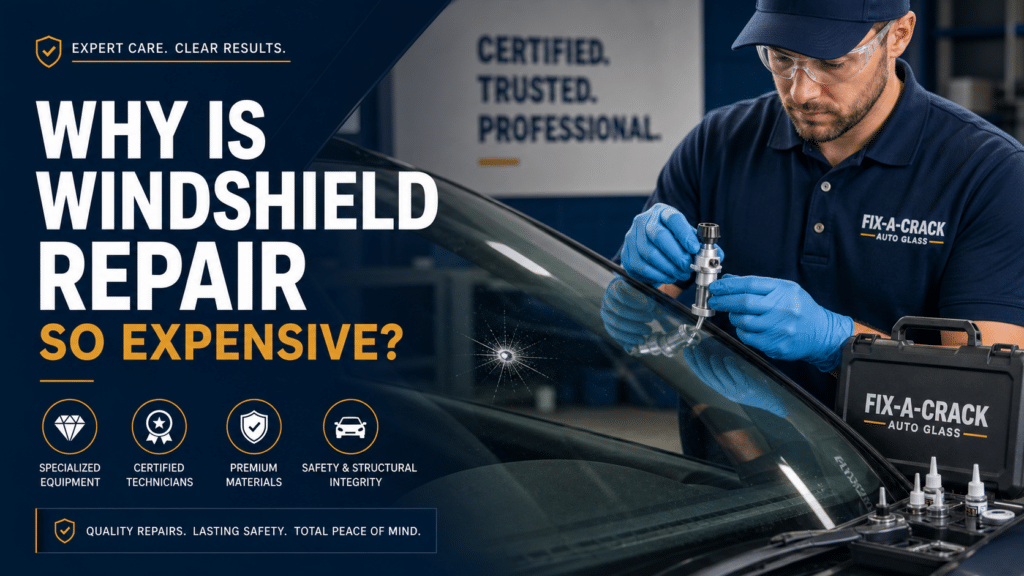
The most expensive thing I see customers do is nothing — because a chip they ignored for two weeks just became a $900 replacement. If you’ve ever gotten a quote and felt surprised by the number, this article is for you. Let me walk you through exactly what drives windshield repair pricing — and how to make sure you’re never overpaying, and honestly the answer to Why Is Windshield Repair So Expensive?
Your Windshield Is a Safety System, Not Just Glass
Most people think their windshield is just a window. It isn’t. It contributes roughly 30% of your vehicle’s roof structural integrity and acts as a backstop for the passenger-side airbag to deploy against correctly. In a rollover, it is one of the primary things keeping the cabin from collapsing around you. Treat it like a cosmetic issue and you’re making a safety decision without realizing it. This helps answer why is windshield repair so expensive.
It’s also laminated glass — two panes bonded together by a polyvinyl butyral plastic interlayer. That interlayer is what keeps the glass from shattering into the cabin on impact. When I repair a chip, I’m injecting resin with a refractive index nearly identical to the glass itself. We use what has been tested as the industries best resin. Onyx Resin by Glasweld is slightly tinted grayish / black, so that light still bends through the repaired area almost exactly the way it bends through undamaged glass. The tint allows fro less refraction and visibly clears up a repair that would normally sparkle due to refraction. That’s precision chemistry — not a simple patch job — and it’s a significant part of why professional windshield repair costs more than most customers expect.
What Actually Drives the Price
Location comes first. Damage inside the Driver’s Primary Viewing Area — the 12-inch-wide zone centered on the driver’s position, running the full height of the wiper sweep — has stricter ROLAGS repair limits than damage sitting outside it. Inside the DPVA, I cannot repair anything larger than one inch in diameter, the finished pit cannot exceed 3/16 of an inch, and no repair can sit within four inches of another. Those rules exist because two repairs placed too close together inside the DPVA can create a blind spot affecting the driver’s binocular vision — a safety issue, not an aesthetic one.
Damage type comes second. A clean bullseye up to one inch is one of the most straightforward repairs in the business. A combination break — one with characteristics of multiple damage types and radiating legs — is the most complex, and those have tighter size thresholds under the standard.
Contamination is the hidden factor most people never consider. The moment a chip happens, dirt and moisture begin entering the break. The longer you wait, the deeper that contamination works its way in — and contaminated damage is significantly harder, sometimes impossible, to repair correctly. This is why two customers can walk in with what looks like identical chips and get completely different quotes.
Here are two real examples I deal with regularly: a fresh bullseye in the upper passenger corner, outside the DPVA, no contamination — affordable, fast, and frequently covered in full by comprehensive insurance. A contaminated combination break with three long cracks radiating from the same impact point, sitting inside the DPVA — that’s a full replacement. And if the vehicle has ADAS cameras, forward collision sensors, or a rain sensor mounted to the glass, recalibration after replacement adds $200–$500 on top of the glass and labor. Same-looking damage on the surface. Completely different costs underneath. Location, damage type, contamination, and vehicle technology drove every dollar of that gap.
Why Waiting Always Costs More
A fresh repair takes me 30 to 45 minutes. A crack that spread while you were waiting forces a full replacement running $300 to $1,000 or more depending on the vehicle and its technology. The math on that is not complicated — but most customers don’t do it until they’re already sitting across from me with a crack they can’t undo.
DIY kits accelerate the problem. Consumer-grade resin is not formulated to the same optical standards as professional repair resin, and once foreign material is introduced into the break, a proper professional repair may no longer be possible. What looked like a $15 savings turns into a mandatory replacement.
How to Pay Less
The first move costs you nothing: call your insurance company before you call any shop. Comprehensive coverage frequently covers chip repair at zero out-of-pocket cost, and glass claims typically do not raise your premium the way a collision claim does. Most customers have no idea this benefit exists until after they’ve already paid cash.
The second move is knowing what to ask. When you call any shop, ask: “Do you follow the ROLAGS Standard?” A certified technician answers that immediately. ROLAGS — the Repair of Laminated Auto Glass Standard — is the national industry benchmark governing how damage is assessed, what qualifies for repair, and how every step of the process should be performed. A shop that can’t answer that question is operating without the standardized framework that protects you as a customer.
When damage qualifies for repair, you preserve your original factory bond — the seal between the glass and the vehicle frame that no aftermarket installation can replicate. You avoid ADAS recalibration costs entirely. And you pay a fraction of what replacement costs in today’s market.
Leave a Reply